Summary: Manager overwhelm is a silent productivity killer—but the right training can flip the script. In 2025, organizations can’t afford outdated approaches to leadership development. Discover which types of manager training deliver the most impact, and the four must-have skills that help managers shift from stressed to successful.

Why manager training needs an overhaul in 2025
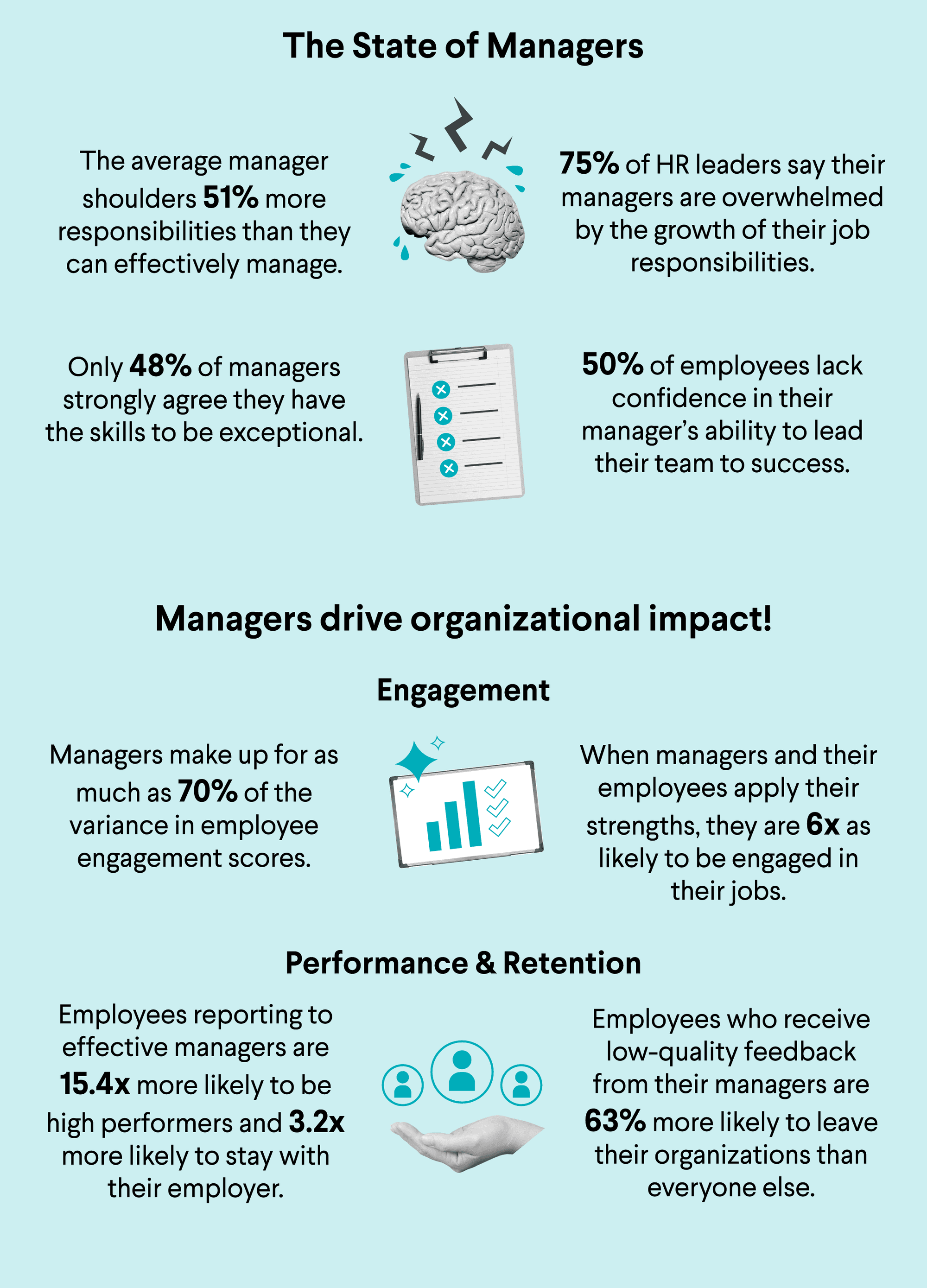
Managers often find themselves in a tough spot – juggling too much without enough support. It eats away at their confidence and has teams questioning if their leaders can steer the ship to success. Ultimately, manager overwhelm brings on employee disengagement, high turnover, and a general slump in performance. This is no easy gig!
It’s prime time to level up your leadership training for managers in 2025. Give managers the support they crave and set off a ripple effect, lifting team performance and driving organizational success.
So, how do you figure out the training and skills that actually matter? The best manager training programs grab managers’ attention and turn them into leaders who can tackle anything and lead their teams to victory.
Good news for you – we’re sharing how to revamp your manager training this year.
Types of manager training: Which one is right for your organization?
Sorting through all the training options can feel daunting – there are tons out there, from in-house programs to video libraries to in-person events.
Don’t stress! We’re here to help you, breaking down four common types of training for managers, laying out the pros and cons, and helping you find the perfect fit for your team.
1. Live training – where learning magic happens.
What it is: Imagine catching your favorite band live instead of watching their recorded gig on YouTube. You’re right in the action, immersed in the music, interacting with the band and the crowd. You leave with a tune on your lips and an unforgettable experience – that’s the magic of live learning. It’s real-time, personal, and memorable.
Examples: In-person and virtual workshops, seminars, and classroom sessions led by live facilitators and trainers.
Pros: In a live setup, managers feel more on the hook to show up and participate actively, creating a stronger sense of responsibility than just tuning into recorded lessons or webinars. Managers get to practice in the moment, network with peers, and bring fresh skills back to the workplace, like a post-concert glow-up.
Cons: Coordinating schedules for all the learners and the facilitator can be a bit challenging, but the harmonious results are worth the effort.
2. On-demand training – the doorstep delivery of learning.
What it is: On-demand learning is on-trend in a world where we can have everything from food to goods brought right to our doors. It conveniently delivers tailored learning experiences directly to your desktop, where you can unbox learning whenever and wherever it suits you best.
Examples: Online courses, webinar replays, TED Talks, and various other pre-recorded learning resources.
Pros: Flexibility and accessibility make it ideal for busy bees. Managers can snag a quick refresher on effective feedback before a tricky conversation or dive into fostering inclusivity to create a greater sense of team belonging. And thanks to technology, on-demand training can be both interactive (think quizzes, polls, videos, etc.) and effective.
Cons: Sometimes what you get isn’t what you thought you ordered. On-demand courses may lack engaging content, so choose carefully! There’s also a risk learners might just go through the motions without retaining the material. And they may find it challenging to focus amid distractions like emails, chats, and texts.
3. In-house training – “Have It Your Way” learning.
What it is: Ever wished for a personal chef? (We do, too!) That’s the vibe you get with in-house training. You curate a learning menu with company-specific courses and skill-building add-ons, all custom-crafted for your organization’s unique flavor.
Examples: Personalized workshops and programs cooked up just for your team – from onboarding to management and technical skills training – and led by internal staff or outsourced specialists.
Pros: Managers get targeted training that aligns with company goals and culture, making it as enticing and relevant as the latest food trend.
Cons: While in-house training offers a customized learning feast, it comes with a fair share of kitchen prep work. You must put effort into creating content, defining learning objectives, sourcing presenters, and managing multiple vendors/payments.
4. Self-led training – the Netflix of learning.
What it is: It’s like having your own learning library at your fingertips. Think of self-led training as scrolling through your favorite streaming service for a movie that fits your mood, but instead, you’re picking the learning experience that suits your situation, consuming it when and where you fancy. It’s comfy, it’s convenient, and it’s all in your hands.
Examples: Free articles, online tutorials, industry blogs, and YouTube how-to’s.
Pros: Managers can explore at their own pace, picking up nuggets of wisdom during a lunch break or binge-learning a specific skill. (Bonus: It’s budget-friendly!)
Cons: Learners might skip it or, like scrolling without picking a movie, struggle to decide which skills to focus on or to find reliable content. Navigating the abundance of free resources requires discernment, as they vary in credibility and relevance.
To craft a stellar learning program, pick the types of manager training that best align with the unique needs and goals of your managers, teams, and company. Mix and match them strategically for a well-rounded approach. At LifeLabs Learning, we beleive live training paired with some on-demand learning is the winning combo – it helps managers learn and retain new skills like a boss.
Download our Learning & Development Toolkit, including an L&D philosophy template, L&D Builder Tool, and L&D Calendar Template, to help identify your manager training goals and create a high-impact curriculum.
4 essential manager skills for 2025
According to a study by Dell Technologies, things are changing so fast that 85% of jobs will be brand new by 2030, meaning fresh skills are a must for survival. Amidst all this speedy change, you might wonder, “What training is needed to become a manager in today’s workplace? What skills will keep them ahead of the game?”
Here at LifeLabs, we focus on Tipping Point Skills – small changes that make a big difference in performance and key business outcomes.
Let’s dive into four must-have Tipping Point Skills for your leadership training for managers this year.
1. Coaching skills
Can your managers fire up their teams and unleash their full potential? With killer coaching skills, managers can:
- Spark team engagement through active listening and asking great questions.
- Help team members tackle challenges solo and with confidence.
- Propel individual contributors to peak performance.
2. Feedback skills
Managers who deliver specific and actionable feedback, even in tricky or remote settings, hold the keys to team growth, adaptability, and improvement. They can:
- Boost morale with targeted praise, building on everyone’s strengths.
- Bridge gaps in skills and performance with solid guidance.
- Ignite collaboration, creating a dynamic and supportive crew.
3. Productivity & Prioritization
Managers who rock time management and prioritization skills build productive and motivated teams. They:
- Help folks set and crush their goals.
- Assist team members in nailing down and sticking to what matters most.
- Enhance overall efficiency for continuous improvement.
4. Effective 1-1s
Top-tier managers use their one-on-one time to boost employee engagement and fuel the growth of their direct reports.
They:
- Build rock-solid relationships as the foundation for success.
- Proactively spot and tackle obstacles, addressing individual needs.
- Make sure everyone feels heard and valued, creating a team vibe that screams belonging.
These are four of the essential skills we found in our research that put managers on the fast track to success, making a big impact in a short amount of time. Craving more? Discover additional core manager skills.
Download The Great Managers Playbook for systems, tools, and skills to unlock the power of your managers fast.
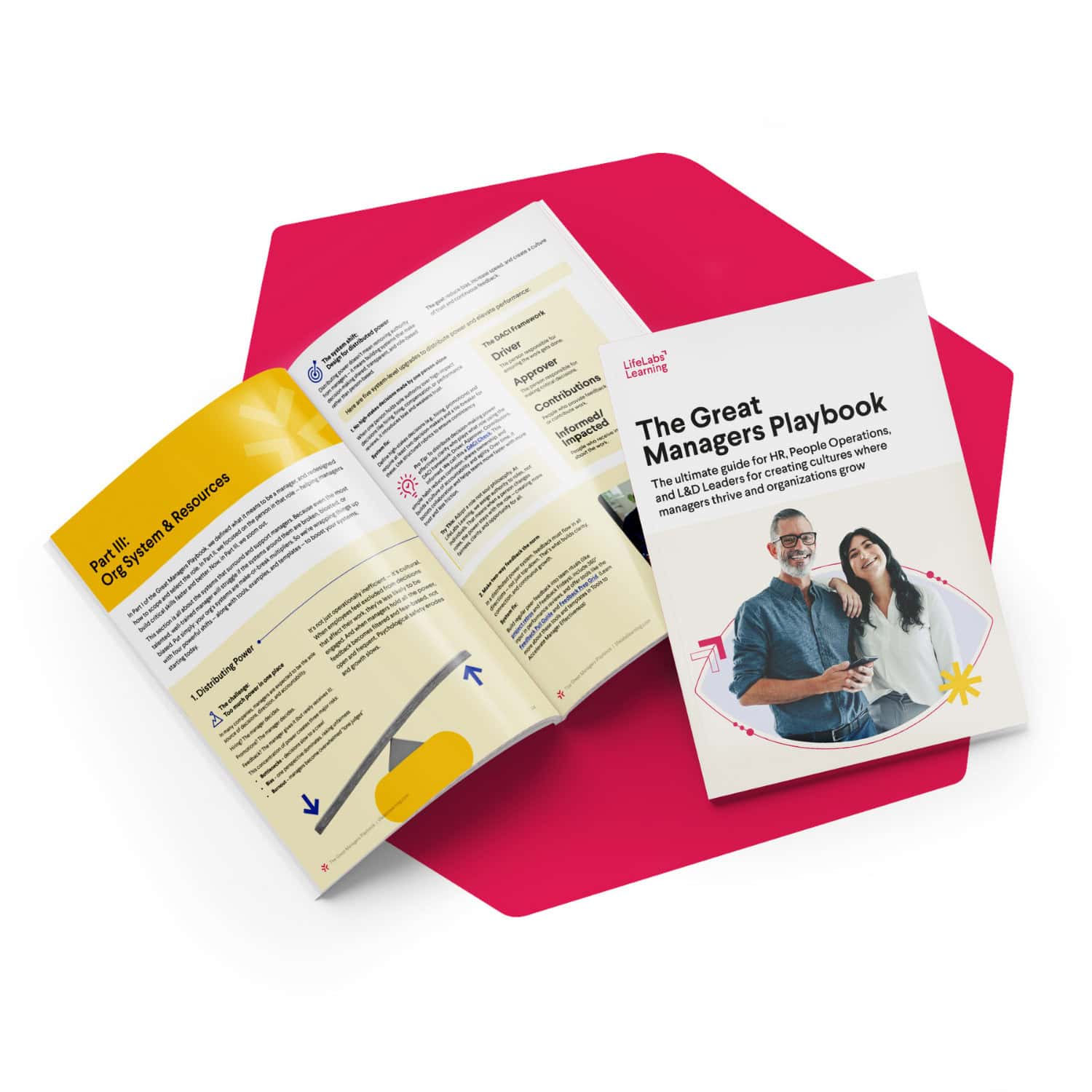
Ready to transform your managers from overwhelmed to overachievers with a manager training overhaul?
Frequently Asked Questions
Why do many manager training programs fail?
Programs often fail when they’re too generic, lack practice opportunities, or don’t connect to company goals. Blended approaches with live practice, reinforcement, and measurement work best.
What type of manager training is most effective?
Live training paired with on-demand learning offers the strongest results. Live workshops build accountability and skills through practice, while on-demand tools reinforce concepts over time.
Which skills should manager training focus on in 2025?
Core skills include coaching, feedback, productivity, and effective one-on-ones. These “Tipping Point Skills” have a ripple effect across performance, engagement, and retention.
How do we know if manager training is working?
Look for evidence of behavior change (e.g., managers running better one-on-ones), feedback from employees, and metrics like engagement, retention, and productivity improvements.
What resources can help us design a manager training program?
LifeLabs Learning offers free tools like the Learning & Development Toolkit and The Great Managers Playbook, plus workshops designed to scale manager impact quickly.