Summary: As AI becomes more embedded in HR, the challenge for People leaders isn’t whether to use it, it’s when. This blog explores how to strike the right balance between AI automation and human leadership. You’ll learn where AI can increase efficiency and accuracy, and where human skills like empathy, communication, and critical thinking are essential. Plus, get practical tips for building a future-ready HR function that’s both tech-powered and people-centered.
Know when to use AI and when not to
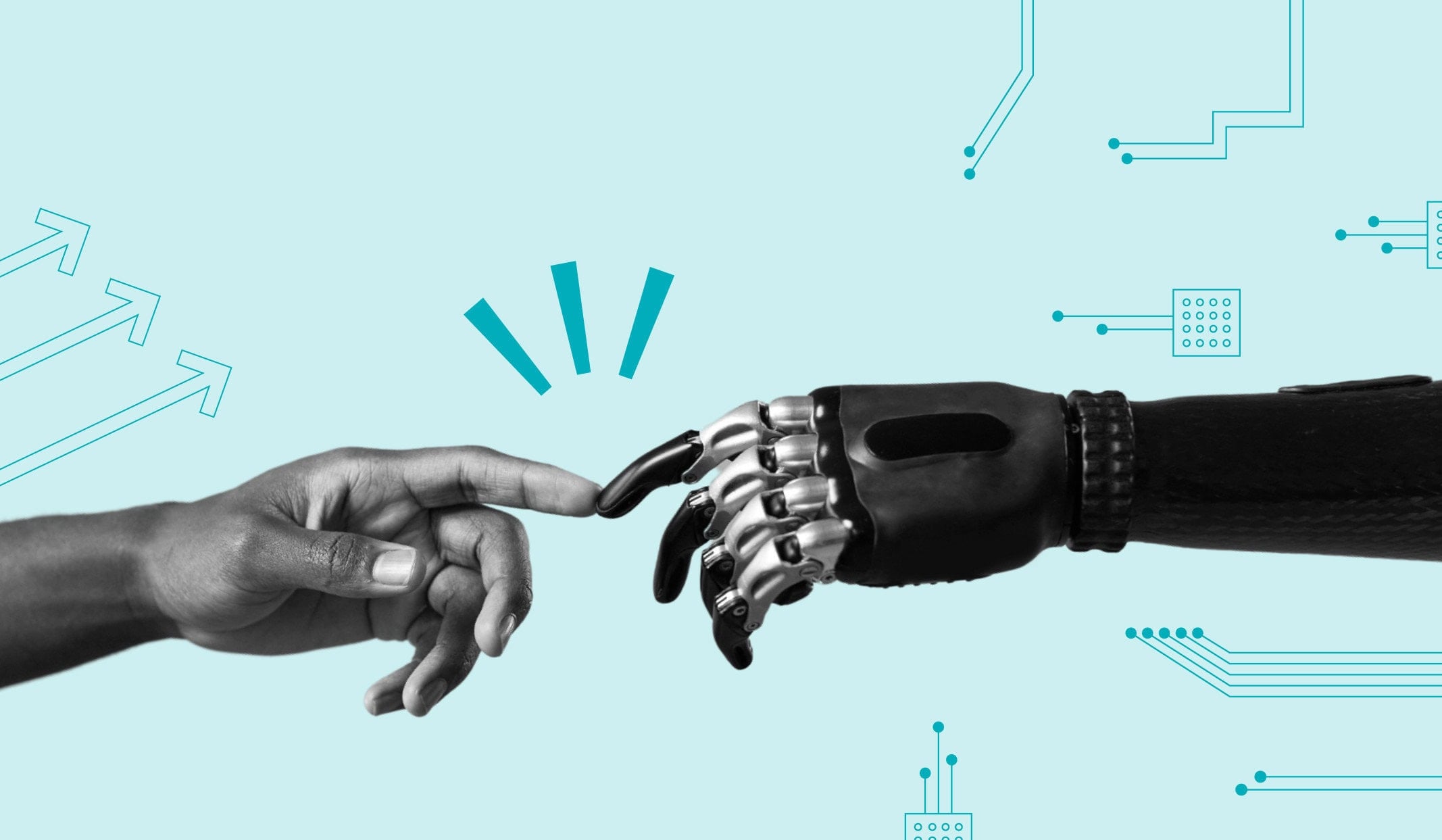
The key to keeping human resources human-centered while tapping into AI’s capabilities is finding the sweet spot where high-tech complements the human touch. Savvy leaders collaborate with AI, striking a balance between efficiency and authentic connections. This combined approach empowers everyone to be on their A-game while ensuring employees are happy, engaged, and ready for whatever the future throws at us.
AI can speed up decisions and automate manual tasks. But not every HR task benefits from automation. Use AI for consistency, scale, and speed. Rely on people for connection, nuance, and trust.
Here’s a breakdown of when to use each.
Use AI when: You need to speed up repetitive or data-heavy tasks
AI is a powerful tool for processing large amounts of information quickly and accurately. It excels at tasks like:
- Resume screening and shortlisting
- Sentiment analysis in surveys or reviews
- Scheduling and logistics
- Identifying trends in employee feedback
- Recommending learning pathways based on skill data
These tasks benefit from AI’s speed and pattern recognition. In fact, studies show that AI can cut time-to-hire in half!
What to watch for: AI lacks context. If it’s left unchecked, it can reinforce bias or overlook what makes someone a strong cultural fit. That’s where human oversight is critical.
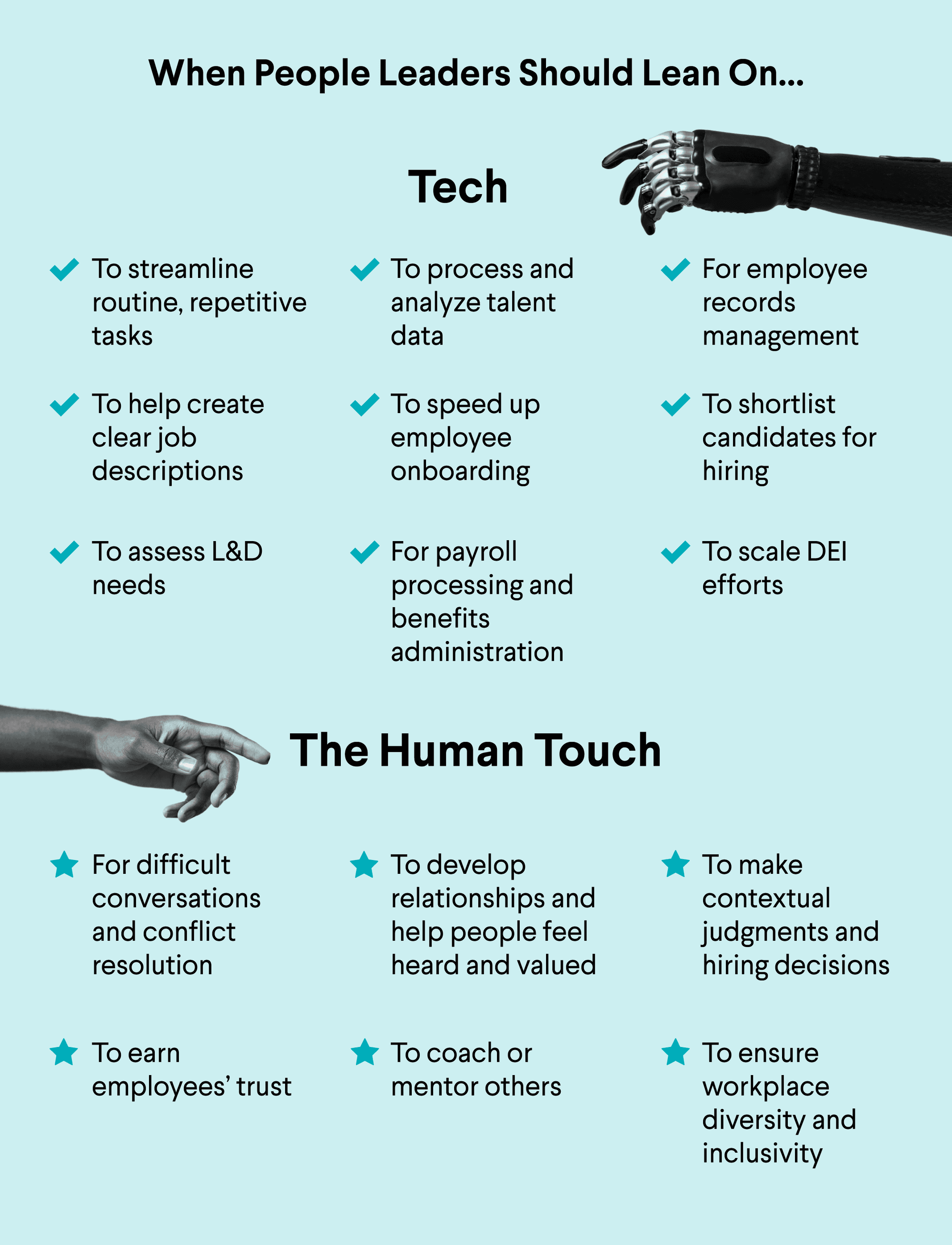
Use human skills when: The situation calls for judgment, emotion, or trust
AI can surface data, but it can’t lead a tough conversation, coach through a conflict, or read between the lines of body language. That’s where human-centered leadership comes in.
Some examples where the human touch is essential:
- Performance reviews and career development conversations
- Conflict resolution and team dynamics
- Organizational change and restructuring
- Supporting mental health or personal challenges
- Making final hiring or promotion decisions
These are the moments that shape trust and culture, and they require empathy, intuition, and clear communication. According to Deloitte, jobs requiring soft skills are growing 2.5x faster than others and will make up two-thirds of all roles by 2030.
What to watch for: Over-automating these human moments can backfire. Employees want to feel heard, understood, and supported, not processed by a system.
Use both when: You’re designing HR systems for scale
The most effective HR leaders don’t choose between AI and people; they design systems that use both. AI does the heavy lifting; humans handle the high stakes.
Examples of effective AI + human collaboration:
- Use AI to flag potential flight risks, then have a manager follow up with a stay conversation.
- Let AI recommend learning content, then discuss it in 1:1s to make it actionable.
- Automate the basics of onboarding, then pair new hires with a human mentor or buddy.
This approach lets you scale impact without sacrificing the personal connections that drive engagement and retention.
What you can do now
Want to strike the right balance between tech and touch? Here’s where to start:
- Audit your HR workflows. What’s repetitive and rules-based? That’s likely a good fit for AI.
- Invest in people skills. Coach your managers on how to lead with empathy, provide feedback, and navigate change—skills that AI can’t replicate.
- Communicate the “why” behind AI. Employees are more likely to embrace AI tools when they understand how it benefits them and when humans stay involved.
Need help equipping managers with the right skills? LifeLabs Learning manager training programs focus on the people side of leadership, so your team is ready to lead through change, coach effectively, and build strong, connected teams.
Great HR is tech-powered and people-centered
AI can do a lot, but it can’t replace human leadership. The most effective HR teams will be those that use technology to enhance, not erase, the human experience. By pairing AI with strong people skills (we call them Tipping Point SkillsTM), you’ll build a culture that’s more efficient, more responsive, and more human than ever.
Want more? Download our AI for HR Playbook
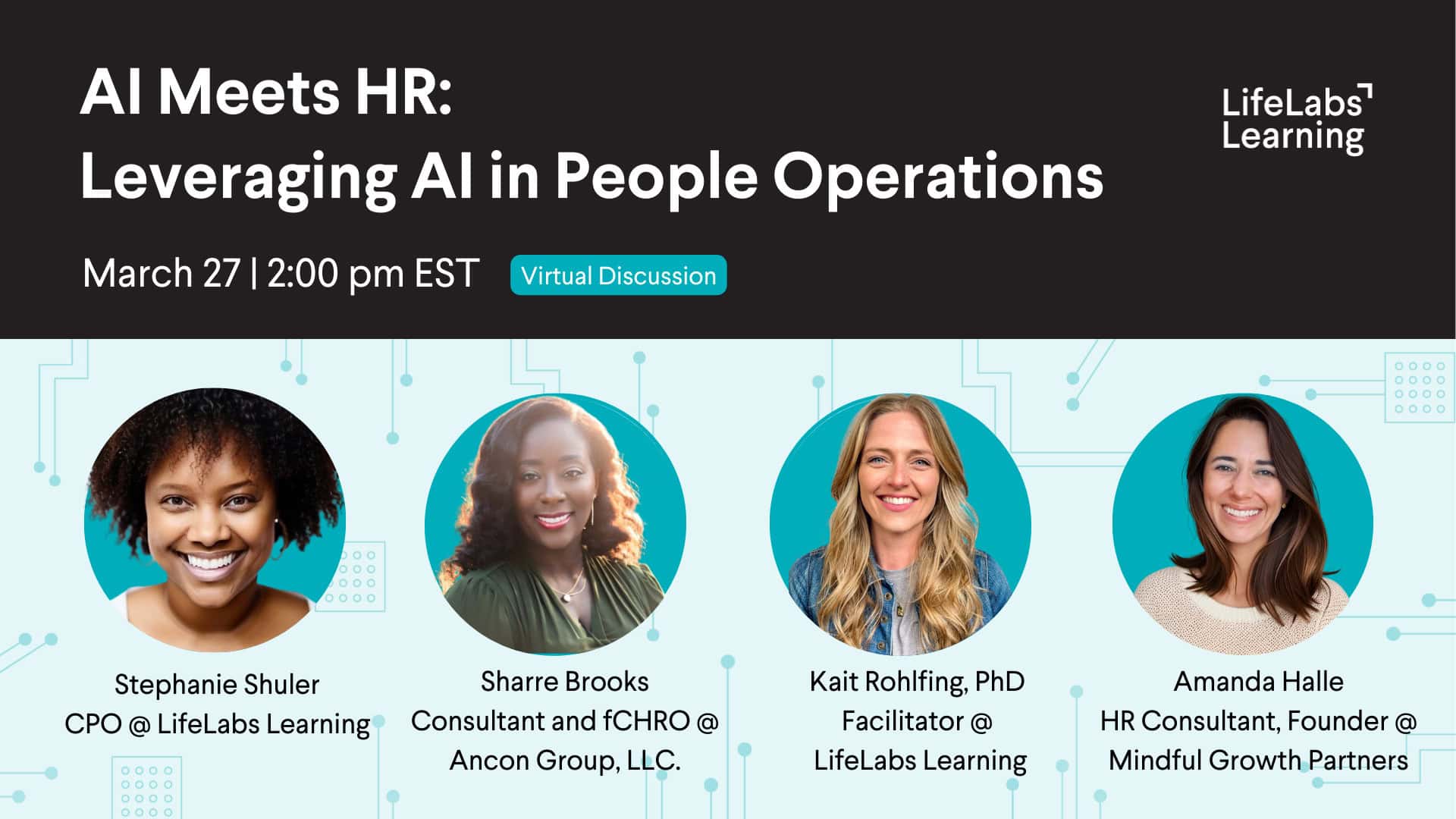
Watch ‘AI Meets HR: Leveraging AI in People Operations’ On-Demand!
Watch Now
FAQs:
Can AI fully automate the hiring process?
AI can streamline early stages like screening and scheduling, but human judgment is essential in final decisions to assess culture fit, motivation, and team dynamics.
Where do most companies overuse AI in HR?
Overuse happens when tech replaces real conversations, like relying solely on AI to deliver performance feedback or resolve workplace issues.
How can I introduce AI to my team without losing trust?
Start with transparency. Explain what the tool does, what it doesn’t do, and how humans will stay involved in decision-making.
What people skills are most critical in the age of AI?
Skills like leading change, strategic thinking, and people development build connection and trust, things AI can’t replicate.